


Resources » Biology » Born to die: pack and population level estimates of wolf pup survival and recruitment in the Greater Voyageurs Ecosystem
Born to die: pack and population level estimates of wolf pup survival and recruitment in the Greater Voyageurs Ecosystem
March 30, 2026
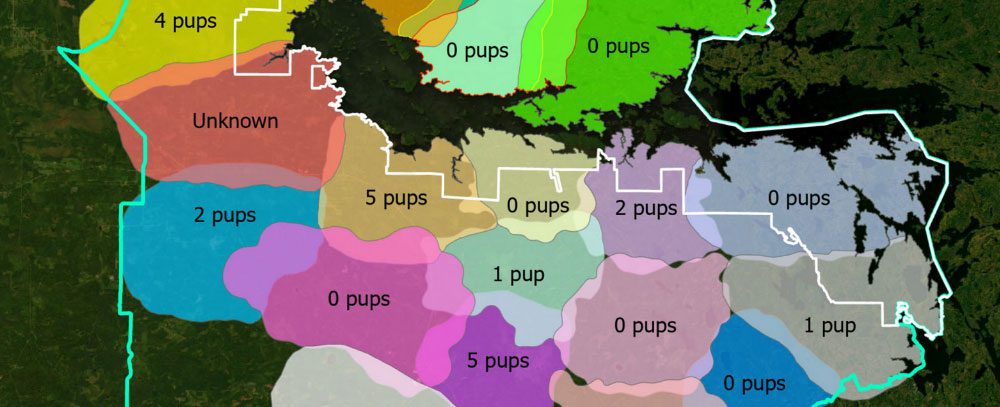
Wolf pup Canis lupus survival is a key driver of wolf population dynamics that remains poorly understood, especially in forested systems, because wolf pups are difficult to monitor. We used a combination of pup counts at dens and remote camera observations to estimate annual survival and recruitment of wolf pups in the Greater Voyageurs Ecosystem, MN, USA, from 2019 to 2025. We estimated recruitment for 33 packs over 92 pack-years and survival for 23 litters from 13 packs. Mean annual pup recruitment was 1.27 pups per pack, and mean annual pup survival was 0.29. Annual wolf pup recruitment and survival rates were highly variable among years and packs, which is likely a result of differences in food availability and the ability of breeding animals to acquire sufficient prey to provision dependent pups. Pup survival was negatively related to litter size. Although most (71%) wolf pups born during our study did not survive their first biological year, the population remained relatively stable, suggesting that recruitment rates were sufficient to sustain the high-density wolf population over time. Our work underscores the potential of integrative monitoring approaches to advance the understanding of wolf reproductive ecology.
Document: Hynes_2026_WildlifeBiology_WolfPupSurvival.pdf 
Author(s): Andrea Hynes, Thomas D. Gable, Austin T. Homkes, Joseph K. Bump and John G. Bruggink
This entry was posted in Biology, Resources and tagged Canis lupus, forested ecosystem, litter size, mortality, prey abundance, remote camera. Bookmark the permalink.
 Human behaviour can trigger large carnivore attacks in developed countries
 Anthropogenic sources dominate gray wolf mortality but leading cause varies with management regime

