


Author Archives: Nathan Lyle

Wolf Conservation Planning and Resource Bank Documents Created
July 2, 2021
Photo by Tristan Alder The National Wolfwatcher Coalition is proud to be one of five conservation groups that crafted The Wolf Conservation Planning and Resource Bank documents. The other groups included, Endangered Species Coalition, Humane Society of the United States, … read more
Posted in Front Page News, News

Bringing social values to wildlife conservation decisions
July 2, 2021
Humans regularly exert a powerful influence on the survival and persistence of species, yet social-science information is used only sporadically in conservation decisions. Using data obtained from a survey of 46,894 US residents, we developed and applied a spatially explicit … read more
Posted in Human Dimensions

Managing animal movement conserves predator–prey dynamics
July 2, 2021
Anthropogenic landscape change can lead to novel interactions among species with consequences for predator–prey dynamics. Population responses of predators and prey vary according to species abundance, movement, and distribution. Although conservation often involves managing species abundance, culling predators to benefit … read more
Posted in Predator/Prey Relationships
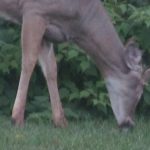
Wolves make roadways safer, generating large economic returns to predator conservation
May 30, 2021
Recent studies uncover cascading ecological effects resulting from removing and reintroducing predators into a landscape, but little is known about effects on human lives and property. We quantify the effects of restoring wolf populations by evaluating their influence on deer–vehicle … read more
Posted in Benefits of Wolves | Tagged deer–vehicle collision, economic impact, gray wolf, trophic cascade, white-tailed deer

2021 National Wolfwatcher Wolf Education Grants
May 30, 2021
Photo credit: Voyageurs Wolf Project Recipient of 2020 Mini- Grant Applications Due Friday, September 3, 2021 Will be awarded during Wolf Awareness Week (10/17-10/23) Grant FAQs WHO? Educators, public or private, or non-profit organizations whose mission includes wolf education and/or … read more
Posted in Grants, News | Tagged education, grant, Mini-Grant, Wolf
Natural re-colonization and admixture of wolves (Canis lupus) in the US Pacific Northwest: challenges for the protection and management of rare and endangered taxa
May 3, 2021
Admixture resulting from natural dispersal processes can potentially generate novel phenotypic variation that may facilitate persistence in changing environments or result in the loss of population-specific adaptations. Yet, under the US Endangered Species Act, policy is limited for management of … read more
Posted in Pacific West Wolves

