


Posts Tagged: Canis lupus
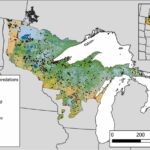
A spatial risk map of gray wolf livestock depredations across the Great Lakes Region
March 31, 2026
Livestock depredations by gray wolves are a source of human-wildlife conflict across their recolonizing range in the midwestern United States of America (USA) which may hinder recovery efforts. Spatial prediction of livestock depredation risk is an important component of preventing … read more
Posted in Conflicts, Resources | Tagged Canis lupus, carnivore, Human–wildlife conflict, livestock depredation, recolonization

Anthropogenic sources dominate gray wolf mortality but leading cause varies with management regime
March 30, 2026
Despite changes in legislation and public attitudes towards large predators, human-caused mortality continues to impact survival and conservation of carnivore species. Understanding the drivers and timing of mortality is critical for informing evidence-based management and policy decisions aimed at improving … read more
Posted in Biology, Resources | Tagged Canis lupus, carnivore, cause-specific mortality, Endangered Species Act, Legal harvest, poaching, survival
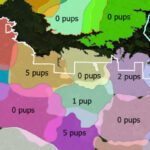
Born to die: pack and population level estimates of wolf pup survival and recruitment in the Greater Voyageurs Ecosystem
March 30, 2026
Wolf pup Canis lupus survival is a key driver of wolf population dynamics that remains poorly understood, especially in forested systems, because wolf pups are difficult to monitor. We used a combination of pup counts at dens and remote camera … read more
Posted in Biology, Resources | Tagged Canis lupus, forested ecosystem, litter size, mortality, prey abundance, remote camera

Changing the Tolerance of the Intolerant: Does Large Carnivore Policy Matter?
December 31, 2024
How people feel about large carnivores can be critical in determining the success of conservation efforts. In some cases, people’s attitudes towards large carnivores are more influenced by policies dictating how people can interact with those species rather than the … read more
Posted in Human Dimensions | Tagged Canis lupus, carnivore conservation, lethal control, policy, tolerance, wildlife management, wisconsin, Wolf
Efects of lethal management on gray wolf pack persistence and reproduction in Wisconsin
November 6, 2024
Direct human-caused mortality accounts for about half of all large mammal mortality in North America. For social species like gray wolves (Canis lupus), the death of pack members can disrupt pack structure and cause pack dissolution, and mortality of breeding … read more
Posted in Conflicts, Resources | Tagged Anthropogenic mortality, Canis lupus, carnivore management, Howl surveys, Legal harvest, Pack persistence
Not afraid of the big bad wolf: calls from large predators do not silence mesopredators
March 9, 2024
Large predators are known to shape the behavior and ecology of sympatric predators via conflict and competition, with mesopredators thought to avoid large predators, while dogs suppress predator activity and act as guardians of human property. However, interspecific communication between … read more
Posted in Biology | Tagged Canis familiaris, Canis latrans, Canis lupus, eavesdropping, ecology of fear, interspecific communication

